A Dresser vs a Chest of Drawers: What’s the Difference?
 Gemma Henry
If you’ve ever wandered around a furniture shop or browsed online for bedroom bits, you’ve probably noticed that some items seem to have more than one name. One of the most common mix-ups is the dresser versus the chest of drawers. Are they the same thing? Are they completely different? Or is it one of those “depends who you ask” situations?
The short answer is that they’re related, but not identical. The longer answer is below. Grab a cuppa and let’s break it down.
What exactly is a chest of drawers?
A chest of drawers is the easier one to define. It’s the classic bedroom storage unit made up entirely of drawers stacked from top to bottom. It’s designed purely for storage: clothes, socks, pyjamas, spare cables you swear you’ll organise one day, half-used candles, random belongings – all the things you want tucked away neatly.
A chest of drawers usually has:
- A tall or mid-height structure
- Drawers only, no cupboards or shelves
- No mirror unless you add one
- A simple, functional design
It’s basically the workhorse of the storage world, and it fits nicely into almost any bedroom layout.
What is a dresser?
This is where things get a little muddier, because the term “dresser” can refer to different things depending on the part of the UK you’re in and the room you’re talking about.
There are two main meanings:
The bedroom dresser
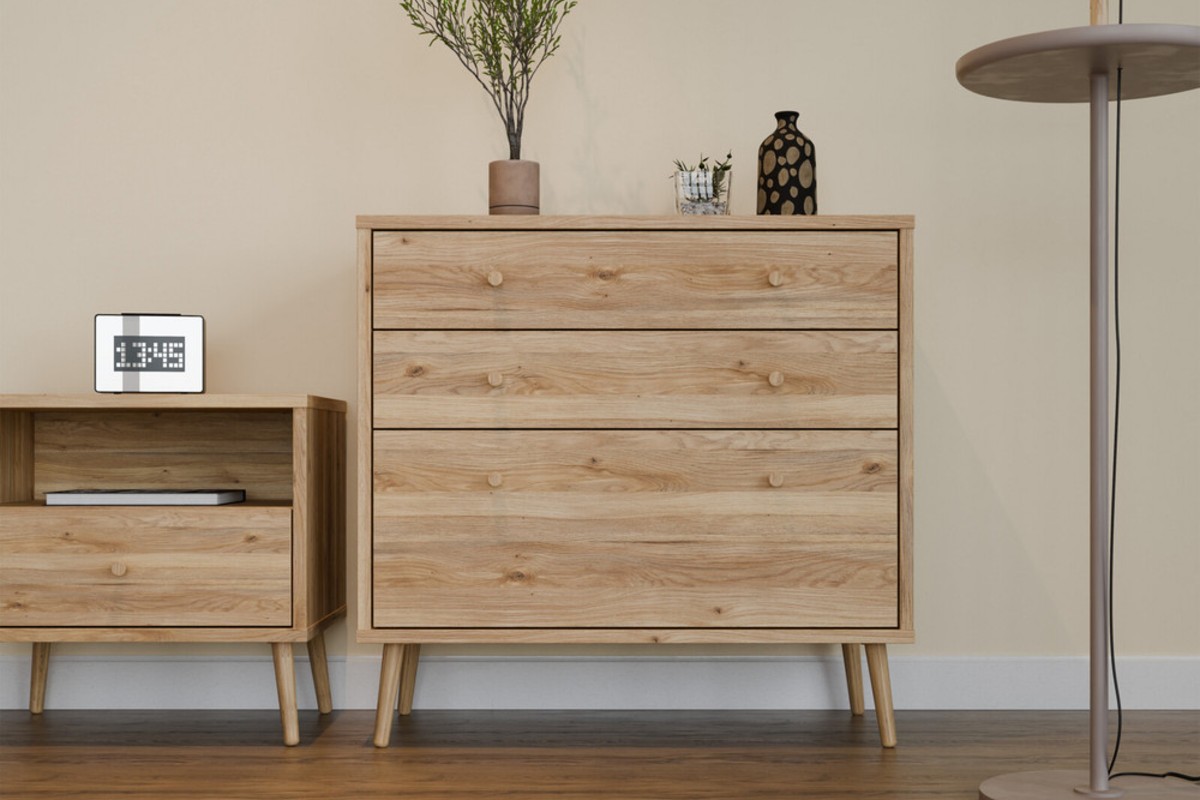
This is the version most modern furniture retailers use. A bedroom dresser is often a wider, lower chest of drawers. Instead of being tall and vertical, it spreads the drawer space horizontally. It usually has a larger surface area on top, which makes it perfect for makeup, skincare, perfume, hair tools, jewellery trays and all the little things we like to keep handy. Sometimes this type of dresser comes with a mirror or has an optional matching mirror to create a dressing-table setup.
The kitchen or Welsh dresser
This is the classic, traditional meaning of the word. A kitchen or Welsh dresser has a solid base with drawers or cupboards, and a shelving unit built on the top for displaying crockery, plates, mugs, or decorative bits and pieces. It usually lives in the kitchen or dining room, not in the bedroom, and it adds a lovely rustic or farmhouse charm to the space.
The main differences
Here’s a straightforward breakdown of how they differ:
- A chest of drawers is tall, simple and made entirely of drawers. It is designed purely for storage and is mostly used in bedrooms.
- A bedroom dresser is wider and lower, with a large top surface. It stores clothes but also doubles as a dressing area or display space.
- A kitchen or Welsh dresser is a completely different piece of furniture, usually found in kitchens or dining rooms, combining lower storage with upper shelves for display.
Why the confusion?
A lot of the mix-up comes from the difference between US and UK terminology. Thanks to online shopping and American TV, many people in the UK now use “dresser” to refer to a wide chest of drawers in the bedroom. Historically, though, the word dresser in the UK was mainly used for kitchen dressers. Because of this, depending on who you ask, a dresser might mean:
- a wide chest of drawers
- a dressing-table-style unit
- a kitchen display cabinet
Meanwhile, the chest of drawers has stayed fairly consistent in meaning.
Which one do you need?
Choosing between the two depends on what you want the furniture to do and how much space you’ve got.
Choose a chest of drawers if:
- You want maximum storage for minimal floor space
- You prefer a taller, vertical unit
- You want something purely functional
Choose a bedroom dresser if:
- You want a place to get ready with plenty of surface space
- You like to display decor or keep your everyday items accessible
- You prefer wider furniture pieces
Choose a kitchen or Welsh dresser if:
- You want a display-and-storage piece for kitchenware
- You’re going for a traditional or farmhouse-style home theme
- You want something more decorative than purely practical
Can they be used interchangeably?
Technically yes, but with limitations. A chest of drawers can be used as a dressing table if you add a mirror on top, but it may not be the ideal height or width. A dresser can store clothing just as well as a chest of drawers, though you may get fewer or shallower drawers depending on the design. A kitchen dresser can be used in other rooms as a statement piece, but it will always look more like kitchen furniture.
So, while you can mix and match depending on your style, each piece is designed with a specific purpose in mind.
Recommended options from Bensons for Beds
Below we’ve included some examples of the many furniture pieces available from Bensons for Beds that we’d recommend for those savvy storage solutions.
-
Bergen 4 Drawer Wide Chest of Drawers: A wide chest with four roomy drawers, ideal for everyday bedroom storage and good for people who want a wider dresser-style layout without going too low.
-
Latina 6 Drawer Wide Chest: A spacious six-drawer piece that suits larger bedrooms or shared spaces. Great for anyone needing lots of storage in a dresser-style width.
-
Hip Hop Tallboy Chest of Drawers: A tall, narrow storage unit perfect for small rooms. Ideal if you need vertical storage without taking up much floor space.
-
Hip Hop 6 Drawer Chest of Drawers: A taller chest with six drawers that can hold clothes, bedding or bulkier fabrics. Practical and versatile.
-
Bergen 5 Drawer Narrow Chest: A slim design that fits into tight spaces but still offers plenty of storage. Great for flats or smaller bedrooms.
Dresser vs chest of drawers: final thoughts
The difference between a dresser and a chest of drawers comes down to function, shape and context. A chest of drawers is tall and purely practical. A bedroom dresser is wider and doubles as a dressing area. A kitchen or Welsh dresser is something else entirely and belongs in a different room. Once you understand these differences, choosing the right furniture becomes a whole lot easier.
Gemma Henry - Content Lead
Gemma finds sleep fascinating and describes the discovery aspect of her role as eye-opening. Her keen eye for detail and dedication to thorough research ensures that Bensons customers get the informative sleep-based advice they're looking for.