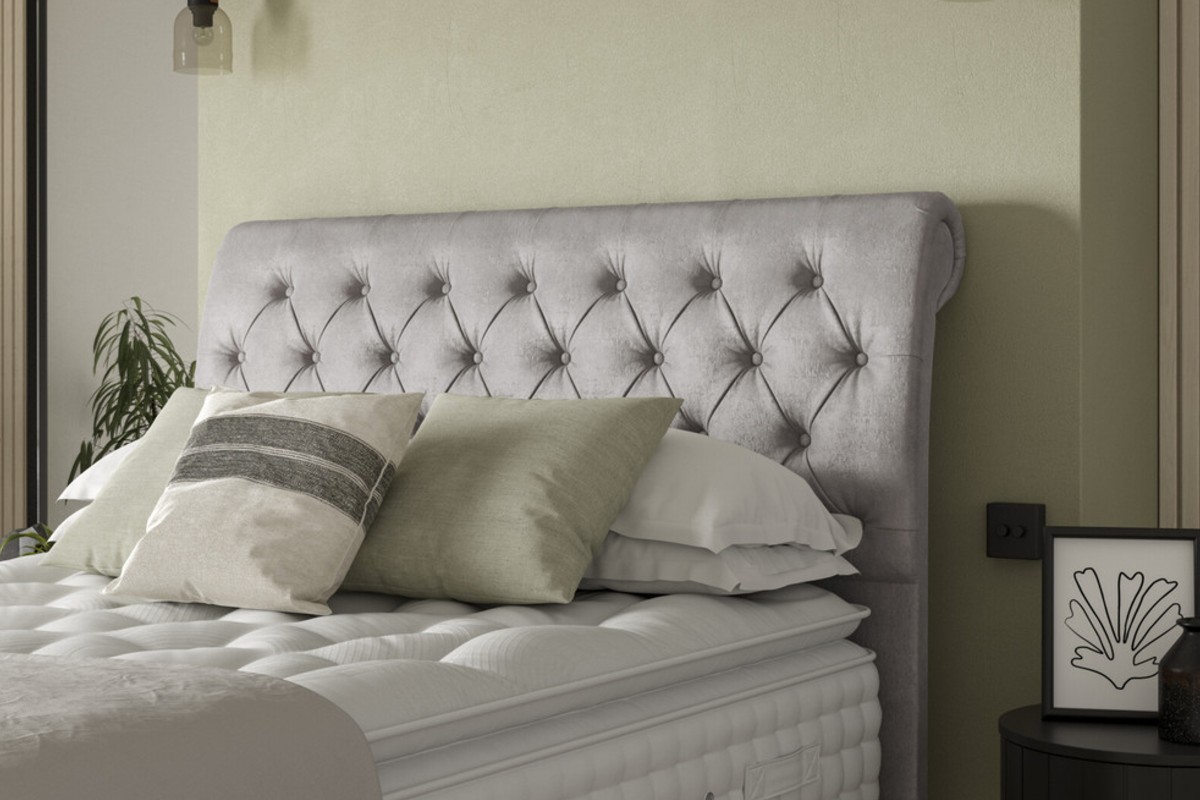
What is a Split Headboard?
 Gemma Henry
If you’ve been browsing for a new bed lately – whether it’s online, or in one of those giant furniture warehouses, or if you’ve just been getting sucked into one too many Instagram bedroom makeover reels – you might’ve stumbled across the term “split headboard.” And if you’ve found yourself thinking, “Right… but what on earth does that actually mean?” don’t worry. You’re definitely not the only one.
Despite sounding a bit like a DIY accident (“Oops, I’ve split the headboard!”), the split headboard is actually a very practical, very normal design choice that’s becoming more popular in UK homes. So let’s have a little nosy into what a split headboard is, why people choose them, and whether one might be worth considering for your own bedroom.
So, what is a split headboard?
A split headboard is exactly what it sounds like: instead of one single headboard panel, you get two separate panels that join together to create the full headboard width. When fitted, the two parts sit flush so it looks like one complete piece — just cleverly divided.
They’re most common on super king and king-size beds, although you’ll sometimes see them with larger custom beds too. The main idea is simple: big beds need big headboards, but big headboards don’t always fit easily through British homes’ quirky layouts — narrow staircases, tight landings, odd turns, you know the ones. Two smaller panels are much easier to manoeuvre.
So rather than wrestle a giant piece of furniture up the stairs (or worse, realise too late that it doesn’t fit at all), a split headboard lets you bring each half in separately and attach them once you’re in the bedroom.
In many cases, once the bed is assembled, you won’t even realise it’s split unless you dedicate some time to really looking for the join.
Why do manufacturers make them?
1. Practicality for UK homes
British houses are not famous for wide hallways or sweeping staircases. Many of us live in older homes built long before super-king beds were a thing. Trying to manoeuvre a massive headboard through Victorian proportions is basically a workout session — and usually not the fun kind.
Splitting the headboard simply makes delivery and assembly possible, especially in flats, lofts, and older terraces.
2. Easier delivery
Two smaller items are easier to handle and can often be transported without needing special oversized packaging. That keeps headaches to a minimum.
3. Greater flexibility for design
Some styles, such as panelled, winged, or heavily upholstered headboards, are easier to create in sections. This gives manufacturers room to play with more dramatic shapes and designs without creating a single, giant piece of furniture.
Do split headboards look different?
In most cases: no — not once they’re fitted.
The join is usually discreet and positioned right across the middle (or east to west as you look at the headboard), behind where your pillows or centre cushion arrangement would sit. Upholstery fabric or padding typically blends together very cleanly. Many people own split headboards for years without even noticing.
Some designs even lean into the split, using two contrasting fabrics or a panelled look. But that’s more of a style choice than a necessity.
To the casual eye, a split headboard looks exactly the same as any standard headboard.
How are split headboards fitted?
It depends a little on the brand and the bed frame, but the general method is:
-
Each half is attached separately to the bed base or to the wall (depending on the design).
-
The two halves are then aligned and fixed together, either with brackets, stabilising bars, or simply by the tension of the frame.
-
The join where each side meets becomes almost invisible once your bedding and cushions are in place.
Some split headboards are “floor-standing,” meaning they go all the way to the floor and are simply anchored behind the base. Others are “strutted,” using the vertical bars you’ll recognise from typical UK headboards. Both versions can come split.
What types of split headboards are available?
Pretty much any style of headboard can be split, but the most common are:
-
Upholstered headboards: Think plush velvet, linen, chenille, crushed velvet — the softer, more luxurious styles we often see in modern homes. Because they tend to be thick and padded, splitting them makes a lot of sense.
-
Winged headboards: The ones with the lovely curved sides. Gorgeous, but big. Definitely candidates for splitting.
-
Panelled or vertical fluted designs: These often use multiple panels anyway, so splitting them down the middle blends seamlessly.
-
Tall hotel-style headboards: Tall headboards are especially difficult to transport, so these are very commonly made in two parts.
Why would you choose a split headboard?
Besides avoiding the classic “pivot… PIVOT!” moment on the staircase (thanks, Friends), there are a few good reasons to go for a split design:
-
It’ll fit almost anywhere. Narrow doorways? Tight stairs? Awkward loft conversion? A split headboard is your best bet.
-
It doesn’t compromise on style. You can still have a huge, luxurious headboard without worrying about getting it stuck in the hallway.
-
Easy to move home with. If you rent or move frequently, a split headboard is far more portable.
-
Often more stable. Floor-standing split models can be surprisingly sturdy once everything is bolted in place.
-
Ideal for DIY home assembly. If you’d rather avoid paying extra installation, smaller sections are easier to handle on your own.
Are there any downsides?
A few minor considerations:
-
You may notice the join if you look really closely. Most people don’t care, but if you’re very particular about details, it’s worth checking product photos or reviews first.
-
Slightly more setup involved. Two pieces means a tiny bit more assembly — but nothing complicated.
-
Not every retailer offers them. Some high-street brands only sell single-piece headboards. Luckily, here at Bensons for Beds we have a wide range of split headboard designs for you to choose from.
Is a split headboard right for you?
You might want to consider one if:
-
You’re buying a king or super-king bed
-
You live in a flat, an older home, or anywhere with tight spaces
-
You want an oversized, hotel-style headboard
-
You prefer easier assembly and simpler moving
-
You’re ordering a custom-made or luxury upholstered headboard
-
If you’re in a modern home with wide access and you’re going for a smaller bed size, you might not need one — but it’s still worth keeping in mind.
Split headboards: Final thoughts
A split headboard is one of those little furniture innovations that just makes sense. It solves a really common UK problem — getting big furniture into small spaces — without sacrificing style or stability. Whether you’re craving that plush boutique-hotel look or simply want a practical headboard for your bedroom upgrade, choosing a split version gives you flexibility and peace of mind.
And best of all? No getting stuck halfway up the stairs holding a giant headboard while you question your life choices.
Gemma Henry - Content Lead
Gemma finds sleep fascinating and describes the discovery aspect of her role as eye-opening. Her keen eye for detail and dedication to thorough research ensures that Bensons customers get the informative sleep-based advice they're looking for.