


How to Know if My Kids are Ready for a Bunk Bed
 Gemma Henry
Bunk beds are a bit of a childhood milestone. For many kids in the UK, moving into a bunk bed feels like a promotion. Suddenly bedtime becomes more exciting, sleepovers seem more official, and siblings may even stop arguing about who gets which side of the room (instead, the argument moves onto who gets the top bunk). For parents, though, the decision is a little more practical. Safety, space, and your child’s maturity all come into play.
If you’re wondering whether your children are ready for a bunk bed, you’re not alone. Many parents consider them when kids start sharing a room or when space becomes tight. The good news is that with the right timing and the right style of bed, bunk beds can be a brilliant solution for family homes.
Below we’ll walk through the key things to think about before making the leap.
What Age is Safe for a Top Bunk?
This is usually the first question parents ask – and rightly so. While every child is different, most safety organisations recommend that children under six should not sleep on the top bunk.
The reason is fairly simple; younger children are still developing coordination and awareness, particularly when climbing ladders or waking during the night. A sleepy five-year-old trying to climb down for a midnight trip to the bathroom can easily lose their footing.
Once children reach around six years old, they generally have the balance and understanding needed to safely use the ladder and stay within the guard rails.
That said, age alone isn’t the only factor. You should also consider:
Your child’s personality
Some kids are calm and cautious, while others treat furniture like a climbing frame. If your child loves jumping off everything in sight, the top bunk might need stricter rules.
Night-time habits
If your child frequently gets up during the night, you’ll want to ensure the ladder is easy to access and the room has a small night light to prevent accidents.
The bunk bed design
Look for beds with high guard rails, sturdy ladders, and a solid frame. Many UK models now have ladders with flat steps rather than narrow rungs, which are much easier for small feet.
A helpful compromise for younger siblings is letting the older child take the top bunk while the younger one sleeps below until they’re old enough to swap.
And of course, clear rules help too. No jumping, no hanging off the rails, and only one person on the ladder at a time might sound obvious, but they’re worth repeating.
What are the Different Types of Bunk Beds for Kids?
If you haven’t looked at bunk beds since your own childhood, you might be surprised at just how many designs now exist. Modern bunk beds are much more versatile than the classic stacked-bed frame most of us remember.
Here are some of the most common styles you’ll find in UK homes:
-
Standard bunk beds: This is the traditional setup: one bed directly above the other. It’s simple, space-efficient, and perfect for siblings sharing a room. Many standard bunk beds can also be separated into two single beds later, which is useful as children grow.
-
Loft beds: A loft bed is essentially a bunk bed without the lower bed. The mattress sits on the top level, while the space underneath is used for something else — often a desk, reading nook, or storage area. These work well for older children, especially once homework and hobbies start taking up more room.
-
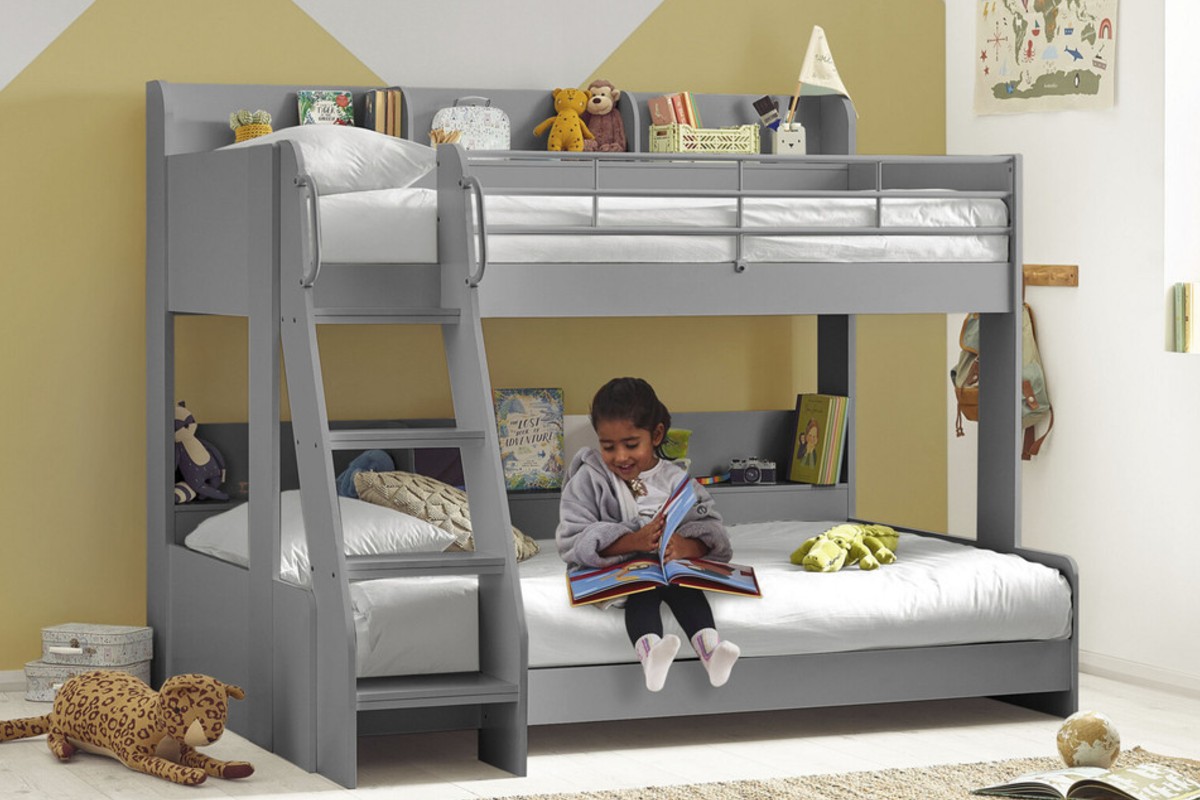
Triple bunk beds: For larger families or frequent sleepovers, triple bunks are becoming increasingly common. Some feature three stacked beds, while others combine a top bunk with a double bed underneath.
-
Bunk beds with storage: One of the biggest advantages of modern designs is bunks with built-in storage. Drawers under the bottom bunk, shelving units, or even wardrobes can be incorporated into the frame. In smaller UK homes, this can make a big difference in keeping bedrooms organised.
The best style will depend on your children’s ages, how much floor space you have, and whether the bed needs to adapt as they grow.
Best bunk beds for small rooms
If space is limited – which is the case in many UK houses and flats – bunk beds can be a lifesaver. By stacking sleeping areas vertically, they effectively free up valuable floor space for desks, toys, or simply moving around.
When choosing a bunk bed for a small room, a few design features can make a big difference.
Look for built-in storage
Beds with drawers underneath or shelving built into the sides help eliminate the need for additional furniture. This is especially useful if the room would otherwise need a separate chest of drawers.
Consider a loft bed with a desk
For older kids, combining a bed and study area in one piece of furniture can dramatically improve the layout of a small bedroom.
Choose a slim frame
Some bunk beds are quite chunky, particularly those with thick wooden posts. In a compact room, a more streamlined design with a lighter frame can help the space feel less cramped.
Check the ladder position
Certain bunk beds allow the ladder to be positioned on either side, which makes it easier to fit the bed against different walls.
Measure ceiling height
This is a step many people overlook. You’ll want enough clearance above the top mattress for your child to sit up comfortably without hitting their head. A general rule is to leave at least 75–90 cm of space between the mattress and the ceiling.
It’s also worth thinking about how the room will evolve. Kids’ rooms change quickly as they grow, and furniture that can adapt can save money later on.
The Bottom Line
Bunk beds can be a fantastic addition to a child’s bedroom, especially for siblings sharing a room or families trying to maximise limited space. They make sleepovers more fun, free up valuable floor area, and often come with clever storage solutions.
The key is making sure your children are old enough, responsible enough, and comfortable with the setup. For most families, that means waiting until the top bunk sleeper is at least six years old and choosing a well-built bed with proper safety features.
Once those boxes are ticked, a bunk bed can quickly become one of the most popular spots in the house. And not just for sleeping, but for reading, chatting, and the occasional whispered conversation long after lights-out.
Gemma Henry - Content Lead
Gemma finds sleep fascinating and describes the discovery aspect of her role as eye-opening. Her keen eye for detail and dedication to thorough research ensures that Bensons customers get the informative sleep-based advice they're looking for.


