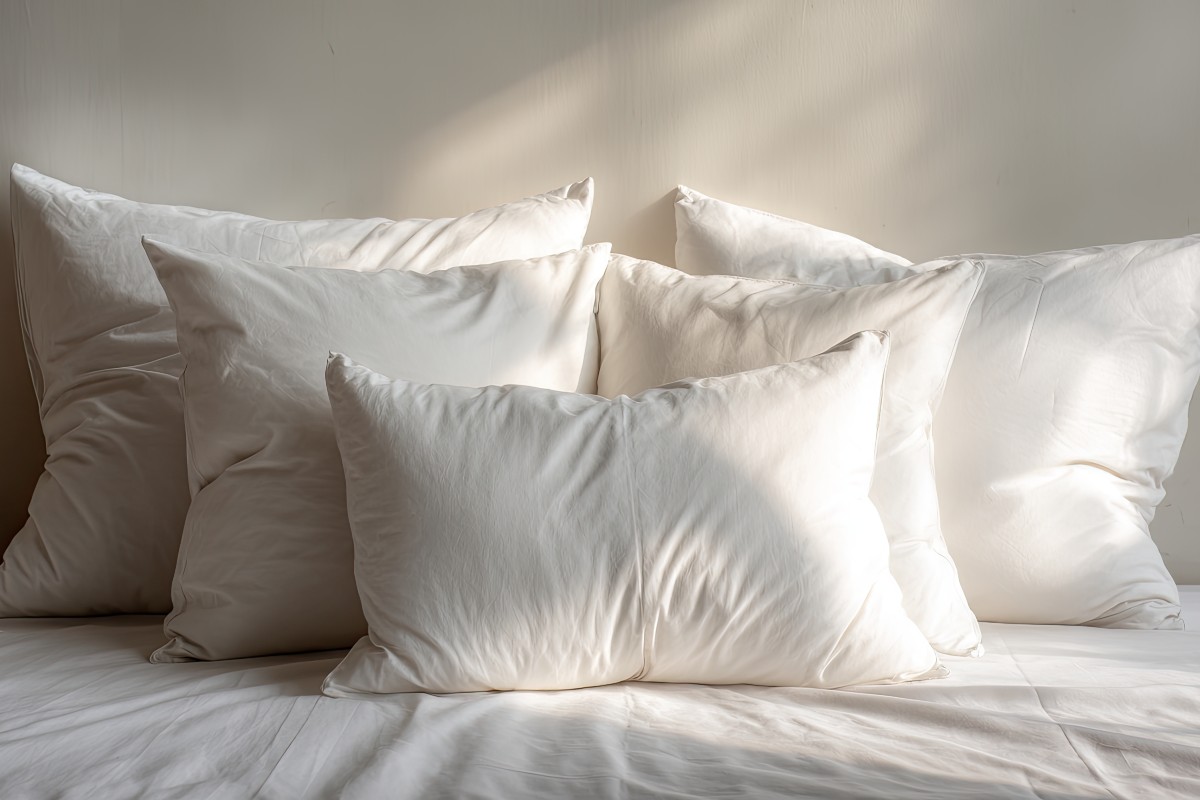
How Many Pillows Should You Sleep With?
 Emma Carlton
If you’ve ever found yourself lying in bed at night, shifting a pillow here, squishing a pillow there, stacking them like some sort of soft, wobbly architectural masterpiece, you’re definitely not alone. The question of how many pillows you should sleep with is one of those strangely divisive topics. Some of us sleep like royalty with four pillows propping us up like we’re holding court, while others manage perfectly well with just one sad-looking pancake of a cushion.
So today, let's have a proper conversation about pillows; why we use them, how many we actually need, and why the whole thing isn’t as simple as “one pillow fits all.”
First things first: why do we use pillows anyway?
Pillows aren’t just fluffy bedtime companions; they’re little ergonomic helpers whose job is to keep your spine aligned while you sleep. Your head, neck, and shoulders all form a natural curve, and a pillow fills in the gap so your neck isn’t hanging awkwardly in mid-air.
Without a decent pillow (or with too many), you end up with:
- A stiff neck
- Shoulder pain
- Headaches
- Feeling like a zombie the next morning
So really, pillows are less about comfort and more about correct posture while sleeping. But the right number for you depends largely on your sleeping position.
If you sleep on your back: one pillow usually does the trick
Back sleepers, congratulations! You’re already in one of the healthiest sleeping positions. Ideally, you need just one medium-loft pillow. That’s a pillow that’s not too flat but not so plump that it pushes your head forward like you’re trying to avoid someone behind you on the bus.
What back sleepers should aim for is keeping the neck supported without lifting the head too far off the mattress. One good-quality pillow is usually perfect.
Some people like adding a second small pillow under their knees to take pressure off the lower back. But that’s optional, not essential.
If you sleep on your side: one really good pillow (but often two)
Side sleepers tend to need a higher, firmer pillow because there’s a bigger gap between the shoulder and the side of the head. If your pillow is too soft or too thin, your head will droop towards the mattress, and you’ll wake up feeling like you slept twisted into a pretzel.
Should side sleepers use two pillows?
Some do, especially if they have soft pillows, stacking two to make the height right. But ideally, you’d have one proper pillow with enough loft to support your head.
Many side sleepers also use a second pillow between the knees — it helps keep the spine straight and takes pressure off the hips. It’s not mandatory, but it’s definitely one of life’s underrated comforts.
If you sleep on your front: technically… none?
Stomach sleeping is the awkward cousin in the sleep-position family. It puts your neck in a twisted position, often for hours at a time. Using a thick pillow makes the angle worse, so experts tend to recommend no pillow or a very thin one.
Of course, lots of people find stomach-sleeping comfortable and aren’t going to stop just because they “should.” If that’s you, opt for the thinnest pillow you can find — something that stops your face sinking into the mattress but doesn’t bend your neck like a contortionist.
But what about all the extra pillows?
Ah yes, the endless array of decorative throw pillows. The “I bought these in the supermarket because they were £6 for two and looked pretty” pillows. The ones your partner complains about when they’re flung onto the floor every night and repositioned every morning.
We’re not judging. But in terms of actual sleep, most of us only need one or two functional pillows, depending on position. Everything else is purely aesthetic or for lounging in bed watching Netflix.
Signs you’re using too many pillows
Stacking your pillows might feel luxurious, but it can be murder on your neck. You may be using too many if you:
- Wake up with neck pain
- Find yourself sliding down the bed
- Constantly fuss with your pillows overnight
- Feel like you’re sleeping in a seated position
If your head is pushed forward or your chin dips into your chest, your pillow setup is probably too high.
Signs you’re not using enough pillows
On the other side of the coin, if you’re waking up with:
- Shoulder pain
- A stiff neck
- Headaches
- Tingling in the arms
…it might mean your pillow isn’t offering enough support.
If you’re finding you need two very flat or soft pillows, that’s usually a sign you should invest in one higher-quality, supportive one.
Does pillow type matter more than quantity?
Absolutely. The number of pillows matters, but the type of pillow matters more. Memory foam, latex, feather, down alternative; they all have different firmness levels and shapes.
For example:
-
Memory foam pillows are great for side and back sleepers needing consistent support.
-
Feather pillows are softer and mouldable but may go flat quicker.
-
Orthopaedic pillows have built-in neck support and can reduce pain.
-
Hotel-style pillows (everyone’s favourite) tend to be plush but not always supportive enough for long-term use.
If you’re using three pillows because yours are too flat or lumpy, buying one decent-quality pillow could change your sleep entirely.
So… what’s the magic number?
If we were forced to give a universal answer (which is always a bit risky), it would look something like this:
Back sleepers: 1 pillow
Side sleepers: 1 supportive pillow (+ optional knee pillow)
Stomach sleepers: 0–1 very thin pillow
Most adults do perfectly well with one or two pillows, depending on position and preference. More than that usually means you're compensating for lack of support.
How many pillows should you sleep with: final thoughts
At the end of the day, the “right” number of pillows is a bit like tea strength, shower temperature, or how you load the dishwasher; everyone’s got an opinion, and most people think theirs is correct.
But your body generally tells you the truth.
If you’re waking up feeling:
- achy
- stiff
- exhausted
- creaky like an ancient wooden floor
…it’s probably time to reassess your pillow situation.
Start with one good pillow that suits your sleep style and see how your body responds. You might find you don’t need as many as you think. Or having that extra cushion between your knees might just be the missing piece of your sleep puzzle.