


Sample Bedtime Routine for 5 Year Olds
 Gemma Henry
If you’ve got a five-year-old at home, you probably already know that bedtime can go one of two ways. It can be calm, cosy and fairly quick… or it can turn into a marathon of “one more story”, “I’m not tired”, and “I need a drink”.
The good news is that most bedtime battles can be avoided with a simple, consistent routine. At five, children are old enough to understand expectations, but they still benefit from a predictable wind-down period that helps their bodies and minds settle for sleep.
Below you’ll find a practical example of a bedtime routine for 5 year olds, along with tips and ideas to make evenings smoother for everyone in the house.
Bedtime routine ideas for preschoolers
Five-year-olds are usually full of energy right up until bedtime. That’s why a good routine focuses on gradually slowing things down rather than expecting them to switch off instantly.
Here’s a simple example of an evening routine that works well for many families.
5:30–6:00 pm – Dinner
A balanced dinner helps keep hunger from waking them during the night. Try to avoid sugary desserts too close to bedtime, as they can give kids a late energy boost.
6:00–6:30 pm – Play or quiet family time
After dinner, give your child some relaxed time. This could be playing with toys, drawing, puzzles, or chatting about their day.
Try to avoid screens during the final hour before bed if possible.
6:30 pm – Bath or wash time
A warm bath helps signal to the body that bedtime is approaching. Many kids find it relaxing, and it creates a clear transition between daytime and nighttime.
6:45 pm – Pyjamas and teeth brushing
Keep things consistent and predictable. Doing the same steps in the same order each night helps children feel secure and understand what’s coming next.
7:00 pm – Story time
Reading together is one of the best parts of the bedtime routine. It’s calming, builds language skills, and creates a positive association with bedtime.
7:15 pm – Lights out
A cuddle, goodnight kiss, and lights out.
Of course, every child is different. Some may need an earlier bedtime, especially if they wake up early for school.
How to create a consistent bedtime routine for kids
Consistency is the secret ingredient when it comes to good sleep habits.
Children thrive on predictable routines. When the same events happen in the same order every evening, their brains start to associate those steps with sleep.
Here are a few simple ways to build consistency:
1. Keep the order the same
Dinner → bath → pyjamas → story → bed.
Even small changes can disrupt the rhythm, so try to keep the order predictable.
2. Aim for the same bedtime each night
Try to keep bedtime within the same 20–30 minute window, even on weekends.
Late nights on Friday and Saturday can make Sunday bedtime surprisingly difficult.
3. Give gentle reminders
Instead of suddenly announcing bedtime, give warnings:
“Ten minutes until bath time.”
“Five minutes until we start our story.”
This helps children mentally prepare.
4. Make the routine positive
Avoid turning bedtime into a battle. Keep things calm and relaxed where possible.
A cosy routine should feel like winding down, not rushing through tasks.
Sleep schedule for 5 year olds
By age five, most children no longer need daytime naps. Their sleep typically comes entirely at night.
Most sleep experts suggest that five-year-olds need around 10–13 hours of sleep in a 24-hour period.
A common schedule might look like this:
7:00 am – Wake up
7:30 am – Breakfast
School / activities during the day
5:30–6:00 pm – Dinner
7:00 pm – Bedtime routine begins
7:15–7:30 pm – Asleep
Some children naturally stay up a bit later, especially during the summer months when it’s still light outside.
If your child is regularly waking very early or struggling to get up in the morning, it may be worth adjusting bedtime slightly earlier.
Signs your child might need more sleep include:
-
Frequent meltdowns in the evening
-
Difficulty concentrating during the day
-
Falling asleep in the car regularly
-
Hyperactive behaviour late in the evening
Often, moving bedtime earlier by just 15–20 minutes can make a big difference.
Kids bedtime routine tips
Even with a routine in place, bedtime can still come with the occasional challenge. Here are a few helpful tips to keep things running smoothly:
-
Keep the bedroom calm: A quiet, comfortable room helps children settle. Soft lighting, favourite cuddly toys, and cosy bedding can make bedtime more inviting.
-
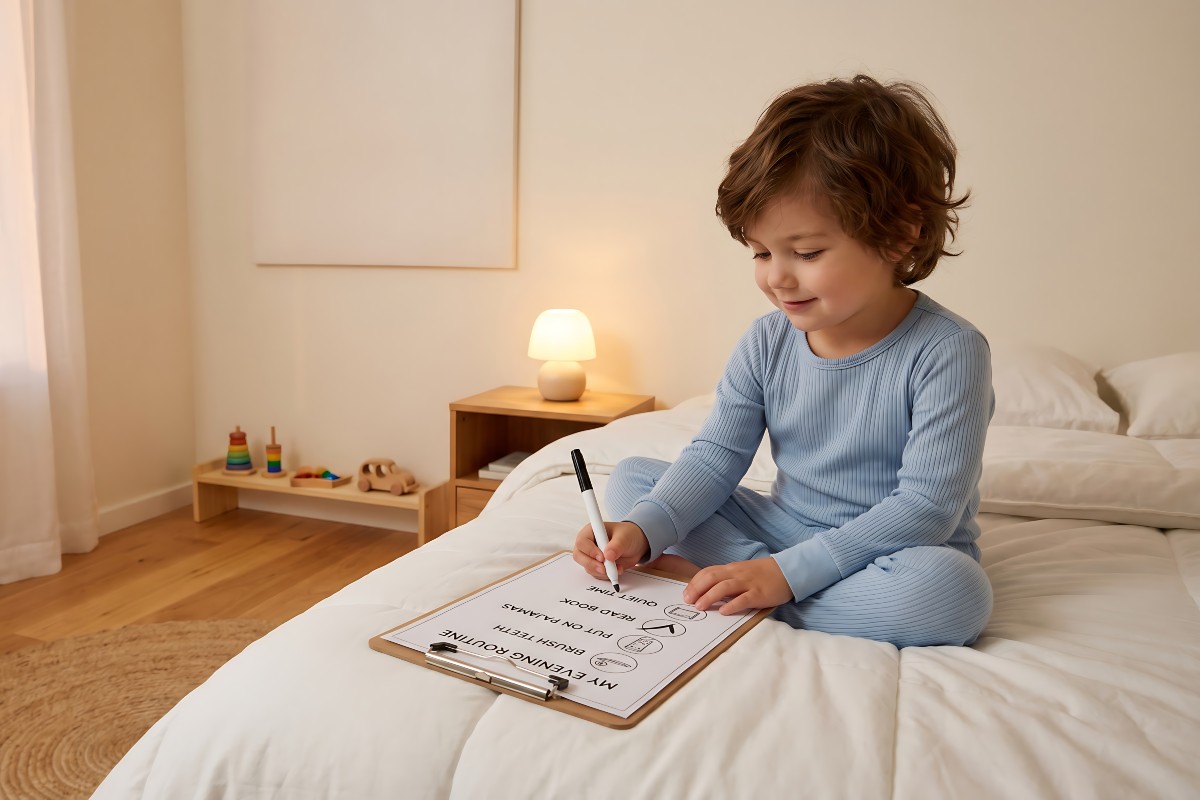
Use a bedtime chart: Some families find success with simple reward charts for younger children. For example, a sticker each night they follow the bedtime routine without fuss. After a week of stickers, they might earn a small reward or special activity.
-
Avoid late snacks: Heavy snacks right before bed can make it harder for kids to settle. If they’re genuinely hungry, something small like a banana or yoghurt usually works well.
-
Limit screens before bed: Tablets, televisions, and phones can make it harder for the brain to wind down. Try to switch screens off at least one hour before bedtime.
-
Stay calm and consistent: If your child repeatedly gets out of bed, calmly guide them back without lots of conversation or negotiation. The less exciting the situation is, the quicker the habit tends to fade.
Final thoughts
Bedtime doesn’t have to be stressful or drawn out. With a simple, predictable routine, most five-year-olds settle into a comfortable rhythm that helps them fall asleep more easily.
The key things to remember are consistency, calm transitions, and creating a cosy end to the day. Over time, the routine becomes a signal to your child’s brain that sleep is coming; and evenings become a lot more peaceful for everyone.
Gemma Henry - Content Lead
Gemma finds sleep fascinating and describes the discovery aspect of her role as eye-opening. Her keen eye for detail and dedication to thorough research ensures that Bensons customers get the informative sleep-based advice they're looking for.


