


Weighted Blanket vs White Noise Machine for Kids' Sleep
 Gemma Henry
If you’ve ever spent an hour trying to persuade a toddler that bedtime is not, in fact, a personal attack on their freedom, you’ll know that getting kids to sleep can feel like a nightly challenge. Parents try everything: bedtime stories, warm milk, blackout curtains, endless cuddles… and eventually start looking into sleep aids.
Two of the most talked-about options are weighted blankets and white noise machines. Both promise better sleep for children, but they work in very different ways.
So, which one is actually helpful? And which is right for your child? Let’s take a closer look.
Weighted Blanket vs White Noise for Toddler Sleep
Weighted blankets and white noise machines tackle sleep problems from completely different angles.
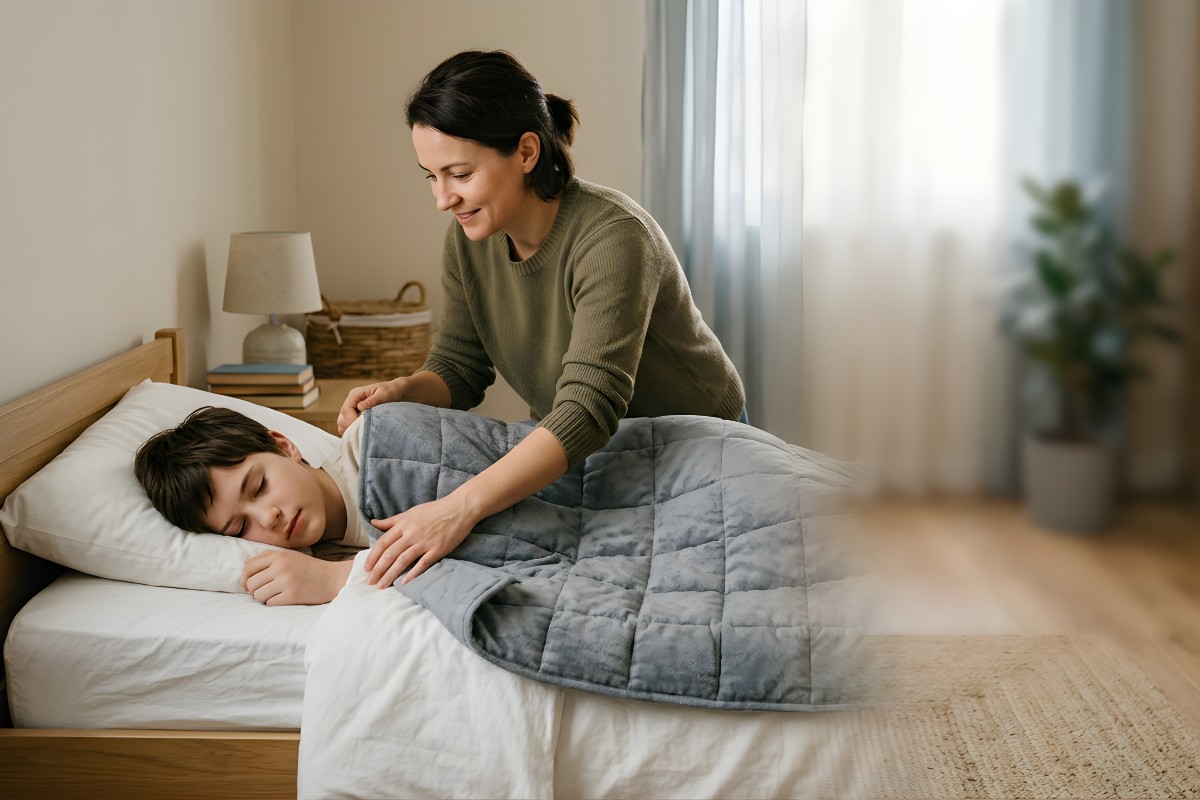
Weighted blankets use gentle pressure across the body to create a calming sensation. This pressure is sometimes described as “deep touch pressure”, similar to a firm hug. The idea is that it can help children relax and settle down faster.
White noise machines produce a consistent background sound like rainfall, a fan, or static. The sound helps mask other noises in the environment and creates a steady audio backdrop that can make it easier for children to fall asleep and stay asleep.
For toddlers specifically, the differences matter.
White noise machines tend to be the more common option for younger children because they’re easy to introduce and don’t require physical contact or extra bedding weight. Many babies already sleep with white noise from their early months.
Weighted blankets are usually considered more appropriate for older children, as toddlers may struggle to move them off independently.
In practical terms:
White noise machines help with:
-
Creating a consistent sleep environment
-
Helping babies and toddlers fall asleep faster
Weighted blankets aim to:
-
Provide calming pressure
-
Reduce restlessness
-
Support relaxation before sleep
For children under 4 years old, white noise is the safer and simpler place to start.
Are Weighted Blankets Safe for Children?
Safety is the most important factor when it comes to weighted blankets.
Most paediatric sleep experts recommend avoiding weighted blankets for babies and toddlers. Younger children may not have the strength or coordination to move the blanket if they become uncomfortable.
General safety guidelines suggest:
-
Not suitable for children under 4 years old
-
Must always be used under adult supervision
-
Child must be able to remove the blanket independently
-
Do not use for more than 20 minutes at a time
-
Not suitable for overnight use
-
Head and neck must remain uncovered at all times
-
Do not wrap or roll the child in the blanket; place it loosely over them
-
Must be appropriately sized and not hang over the sides of the bed
-
Never use as a method of restraint
Another rule often suggested is the 10% weight guideline. The blanket should weigh roughly 10% of the child’s body weight (sometimes slightly less).
For example:
-
A 20 kg child → about a 2 kg blanket
But even with correct weight, supervision and careful introduction are important.
Parents should also avoid weighted blankets if the child has:
-
breathing problems
-
sleep apnoea
-
circulation issues
-
mobility difficulties
If you’re unsure, it’s always worth checking with a paediatrician or occupational therapist before introducing one (1).
Best White Noise Machines for Baby Sleep
White noise machines are widely used by parents because they’re easy to set up and generally safe when used correctly.
The best ones share a few key features:
1. Consistent sound
The noise should loop seamlessly. Sudden gaps or restarts can wake children.
2. Adjustable volume
It’s important to keep the sound level safe. Experts usually recommend keeping white noise below around 50 decibels, roughly the level of a quiet shower.
3. Timer options
Some parents prefer a machine that turns off after the child falls asleep, while others run it all night.
4. Multiple sound options
While white noise works for many babies, others prefer gentle rain, ocean sounds, or fan noise.
5. Portable design
Portable machines are useful for travel, naps at grandparents’ houses, or holidays.
When placing a white noise machine in the nursery, it’s best to keep it a few feet away from the cot rather than right next to the child’s head.
Many parents find white noise especially helpful during the early years because it can recreate the constant background sound babies experienced before birth.
Weighted Blanket Benefits for Kids with Anxiety
While weighted blankets aren’t ideal for very young children, they can sometimes help older kids dealing with anxiety or sensory difficulties.
The calming pressure from the blanket may help regulate the nervous system. Some children describe the feeling as similar to being hugged or gently held.
Possible benefits reported by families include:
-
Feeling calmer at bedtime
-
Less bedtime resistance
-
Reduced night-time restlessness
-
A stronger sense of comfort and security
Weighted blankets are sometimes recommended by occupational therapists, particularly for children with sensory processing challenges.
They can also be used outside bedtime, such as during quiet reading time, relaxation, or winding down after school.
However, it’s important to remember that research is still evolving. While many families report improvements, weighted blankets aren’t a guaranteed solution for anxiety or sleep problems (2).
They tend to work best as one part of a broader calming bedtime routine.
Alternatives to Weighted Blankets for Child Sleep Problems
If your child struggles with sleep but a weighted blanket doesn’t feel like the right option, there are plenty of other strategies worth trying.
Many sleep difficulties improve with simple environmental or routine changes.
Here are a few alternatives parents often find helpful:
-
Consistent bedtime routine: Children thrive on predictable patterns. A routine like bath → story → cuddle → lights out helps signal that sleep is coming.
-
Comfort objects: A favourite teddy or blanket can provide reassurance and make bedtime feel safer.
-
Night lights: For children who are afraid of the dark, a soft night light can reduce bedtime anxiety without being too stimulating.
-
Bedtime relaxation: Gentle stretching, deep breathing, or quiet story time can help children transition from busy daytime energy to calm night-time sleep.
-
White noise or calming sounds: As mentioned earlier, sound machines are a simple way to stabilise the sleep environment.
-
Better sleep environment: Small adjustments can make a big difference:
-
blackout curtains
-
limiting screens before bed
-
reducing late evening sugar
For persistent sleep problems, it can also help to speak with a health visitor, paediatrician, or sleep specialist.
The Bottom Line
Both weighted blankets and white noise machines can help children sleep better, but they serve different purposes.
White noise machines are usually the easiest and safest choice for babies and toddlers. They create a consistent sleep environment and block out background noise.
Weighted blankets may benefit some older children, especially those with anxiety or sensory needs, but they need to be used carefully and at the right age.
For most families, the real secret to better sleep isn’t just a product. It’s a consistent, calming bedtime routine combined with a comfortable sleep environment.
And unfortunately, no sleep gadget has yet solved the classic toddler delay tactic:
“One more story.”
Sources:
Gemma Henry - Content Lead
Gemma finds sleep fascinating and describes the discovery aspect of her role as eye-opening. Her keen eye for detail and dedication to thorough research ensures that Bensons customers get the informative sleep-based advice they're looking for.


