


How to Check for Bed Bugs
 Emma Carlton
There’s nothing quite as horrifying as the thought of sharing your bed with creepy crawlies. Bed bugs are every sleeper’s nightmare, and once they settle in, they can be a nightmare to get rid of. If you’re waking up with itchy bites or just want to make sure your bed is bug-free, here’s how to check for bed bugs properly.
What do bed bugs look like?
Adult bed bugs are small, flat, oval-shaped insects that are reddish-brown in colour. Before feeding, they're roughly the size of an apple seed (around 5-7mm long), becoming larger and darker after feeding on blood.
Young bed bugs, known as nymphs, are smaller and lighter in colour, making them more difficult to spot. Bed bug eggs are tiny, white, and approximately the size of a pinhead.
When inspecting your bed, mattress, or furniture, look for live bugs, eggs, shed skins, and dark spotting left behind by their droppings.
1. Look for bite marks (but don’t rely on them)
One of the first signs of bed bugs is waking up with small, red, itchy bites, often in clusters or a line. However, not everyone reacts to bed bug bites, and they can sometimes be mistaken for mosquito bites or a rash. So, while bites can be a clue that you have bed bugs, you’ll need more evidence to confirm that it is actually an infestation.
2. Check your mattress and bedding
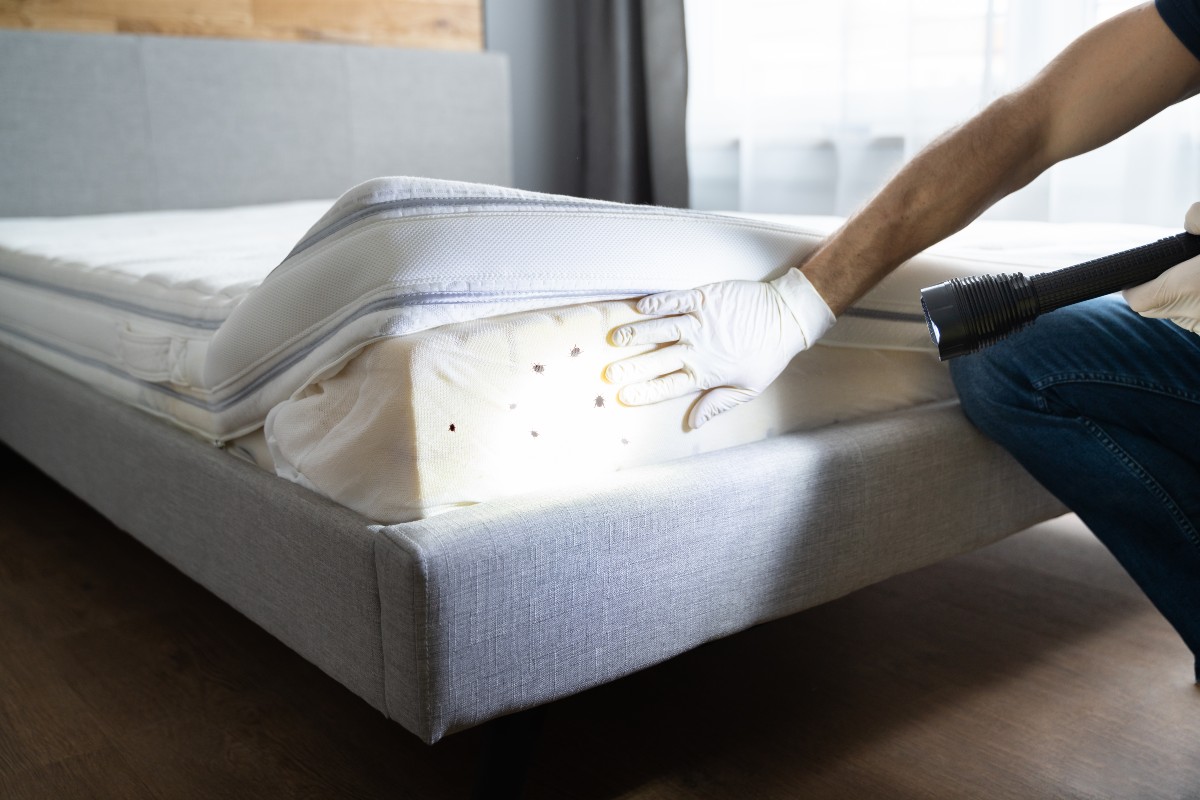
Bed bugs love to hide in the seams and crevices of your mattress. Here’s how to inspect your mattress for bed bugs properly:
-
Strip your bed down to the bare mattress.
-
Look closely at the seams, folds, and corners of your mattress for small brown or red stains. Spot any? These could be bed bug droppings or crushed bugs.
-
Use a torch to check for tiny, apple seed-sized bugs crawling around.
3. Examine your bed frame and headboard
Bed bugs aren’t just mattress dwellers; they can also hide in your bed frame, particularly if it’s a wooden one. Look out for:
-
Small, dark spots (bed bug poo) along any joints and cracks on your bedframe.
-
Live bugs hiding in crevices.
-
Shed skin or tiny white eggs (which look very similar to grains of rice).
4. Inspect nearby furniture
If you suspect a bed bug infestation, don’t just focus on your bed. Check any furniture close to it too, including bedside tables, skirting boards, and even behind picture frames. Bed bugs love tight, dark spaces, so make sure to be thorough.
5. Use sticky tape or a bed bug trap
If you’re struggling to spot them with the naked eye, you could try laying down some double-sided sticky tape around the legs of your bed. This can catch any crawling critters overnight. Alternatively, you can buy a bed bug trap (available from many online multi-seller platforms). This can be used to lure them in and help confirm or disprove their presence.
6. Check your clothes and luggage
Bed bugs are excellent hitchhikers and can travel in clothes, bags, and suitcases. If you’ve recently stayed somewhere and suspect an infestation, check your clothing seams and suitcase lining for any unwanted passengers.
Pro tip: Check for bed bugs on these items before you enter your house to avoid bringing them inside.
7. Use a hairdryer to flush them out
Bed bugs hate heat, so if you suspect they’re hiding in cracks and crevices, blast the area with a hairdryer. The heat can encourage them to scuttle out, making them easier to spot.
Early signs of bed bugs
The earlier you spot bed bugs, the easier they are to deal with.
Common early warning signs include:
- Small red bites appearing overnight
- Tiny black or brown spots on bedding
- Small blood stains on sheets
- Shed bed bug skins
- A musty, sweet odour in severe infestations
- Live bugs around mattress seams and bed frames
Not everyone reacts to bites, so it's important to look for physical signs around your sleeping area as well.
How to check a hotel room for bed bugs
When staying away from home, checking your room for bed bugs can help prevent bringing them back with you.
Before unpacking:
- Place luggage in the bathroom while you inspect the room.
- Pull back bed sheets and check mattress seams and corners.
- Look behind the headboard where possible.
- Check upholstered furniture and luggage racks.
- Watch for black spots, shed skins, eggs, or live insects.
After returning home, inspect your luggage and wash clothing on a high-temperature cycle as a precaution.
How can you tell if you have bed bugs?
The most common signs of bed bugs include itchy bites, small blood spots on bedding, dark droppings on mattresses and furniture, shed skins, eggs, and live insects hiding in mattress seams, bed frames, and nearby furniture. A thorough inspection of your sleeping area is the best way to confirm whether bed bugs are present.
According to the Centers for Disease Control and Prevention (CDC), bed bugs commonly hide in mattresses, box springs, bed frames, headboards, and nearby clutter, making thorough inspections essential when identifying an infestation.
How to spot bed bugs FAQs
Can you see bed bugs with the naked eye?
Yes! Adult bed bugs are about the size of an apple seed and can be seen without a magnifying glass. However, their eggs and young nymphs are much smaller and harder to spot.
What do bed bug droppings look like?
Bed bug droppings look like tiny dark brown or black specks, a bit like ground pepper or ink spots. You might find them on your sheets, mattress seams, or bedroom furniture.
Do bed bugs only live in beds?
No! Bed bugs can hide in furniture, carpets, skirting boards, and even behind wallpaper. Anywhere dark and close to their food source (that’s you, by the way) is fair game.
Can bed bugs make you ill?
While they don’t spread diseases (1), their bites can be very itchy and irritating. In some cases, scratching can lead to secondary infections. If you notice any signs of infection, book an appointment with your GP or speak to your pharmacist.
What should I do if I find bed bugs?
Act fast! Wash all bedding and clothing on a high heat, vacuum thoroughly, and consider using a bed bug spray. If you do have an infestation, it’s time to call in a professional exterminator.
What kills bed bugs instantly?
Professional-grade treatments are often the most effective solution. Washing affected bedding at high temperatures and using heat treatments can help eliminate bed bugs, but established infestations typically require professional pest control.
Can bed bugs live in memory foam mattresses?
Yes. Bed bugs don't live inside the foam itself, but they can hide in mattress seams, piping, labels, and nearby cracks around the bed.
Do bed bugs smell?
In larger infestations, bed bugs can produce a musty, sweet odour that some people compare to coriander or damp towels.
Can you have bed bugs without bite marks?
Yes. Some people show little or no reaction to bed bug bites, making physical signs such as droppings, eggs, or shed skins more reliable indicators.
Key takeaways
- Bed bugs are visible to the naked eye and are roughly the size of an apple seed.
- Common signs include bites, droppings, eggs, shed skins, and blood spots.
- Bed bugs frequently hide in mattress seams, bed frames, furniture, and luggage.
- Early detection can help prevent a larger infestation.
- Professional pest control may be necessary for established infestations.
How to check for bed bugs: final thoughts
Bed bugs are sneaky little pests, but with a keen eye and some detective work, you can catch them before they take over your home. Regular checks can help you spot them early and stop an infestation in its tracks.
And if you have been the unfortunate victim of a bed bug infestation, and are looking for a new bed, mattress, or bedding as a result, pop into your local Bensons for Beds store. There, you’ll find one of our friendly sleep experts who can offer advice on the best bed care products to help minimise the risk of a future infestation.
Sources:


