How to Reduce Dust in the Bedroom
 Gemma Henry
With our busy lives, it’s easy to overlook the odd bits of dirt around the house or put off that deep clean you’ve been procrastinating about for three weeks. But if it’s gotten to the point where you're constantly sneezing, waking up with a blocked nose, or you’ve noticed those fuzzy little “dust bunnies” multiplying under the bed like they pay rent, it might just be the time to take action and get things under control.
Dust isn’t just a bit of fluff — it’s a mix of dead skin cells, excess fibres from clothes and bedding, small pieces of soil and pollen from outside, and if you have pets, fur and dander too. It’s unavoidable, but not unbeatable.
Here’s our guide that will hopefully teach you how to reduce dust in your bedroom without turning your life upside down or spending your precious weekends glued to a hoover.
1. Your bed: dust HQ
If you didn’t already realise, beds are an integral part of the day to day and actually we spend around one third of our life in them (1). They’re definitely some of the most cosy spots, but beds are also the perfect place for dust to settle and build up.
What to do:
-
Wash your bedding weekly. We know it can be a pain, particularly in the UK where we aren’t blessed with endless sunshine to dry the washing. But washing your bedding on a regular basis really is necessary. Make sure to include pillowcases, duvet covers, and sheets. As well as remembering to chuck in any throws or blankets too.
-
Vacuum your mattress or give it a good brush once a month. Utilise your vacuum’s upholstery tool. A good hack is to try and sprinkle a bit of bicarbonate of soda on it beforehand for freshness – leave it to settle for 30 mins, then vacuum it all up. In some cases, manufacturers will advise against using a vacuum cleaner on your mattress as it has the potential to displace some of those lovely mattress fillings. If this applies to your mattress, use a gentle brush to remove any surface dust that has collected on your mattress instead.
-
Use mattress and pillow protectors. These can help by adding a barrier between you and the allergens and thankfully are also easily washable. Take a look at the pillow protectors and mattress protectors we have available at Bensons while you’re here.
-
Consider replacing your pillows every 1–2 years. And your mattress needs replacing every 7–10 years, especially if you’re an allergy sufferer.
2. Clear the clutter – dust loves it
It’s easy to let things build up but the truth is, the more stuff you’ve got, the more places that dust has to settle and the harder it can be to eliminate it all. That old bookshelf filled with random meaningless trinkets, your bedside table covered in receipts and mystery chargers – these are some of dust’s favourite hangouts. Now we’re not saying to throw out everything you own or things that mean a lot to you, but maybe just a gentle nudge to think about if you actually need it, or if you can give it away.
What to do:
-
Keep surfaces as clear as possible. Try the “one tray rule” – if something doesn’t fit in the tray, it gets stored elsewhere or removed.
-
Store things in drawers or boxes. Try to organise your drawers for easier living. Clear containers are also great – you can see what’s inside without exposing it all to the air.
-
Re-home or donate things you don’t use. This can be a difficult task so try to take it a bit at a time and make your way through all that stuff you don’t really need.
Bonus: Decluttering also makes the space feel calmer and easier to clean.
3. Hoover like you mean it
A quick hoover around those visible parts of the carpet won’t cut it here. Dust has the impressive ability of being able to hide just about anywhere – under the bed, behind furniture, in corners. You’ll need to go pull out your full Marie Kondo moves occasionally (2).
What to do:
-
Vacuum once a week minimum, more if you’ve got allergies or pets. Vacuuming regularly might seem like a pain at first, but it’ll make it all that much easier the next time you need to do it.
-
Use a filter vacuum – these can be very helpful for trapping those tiny particles other vacuums might just blow around.
-
Move furniture now and then to get to those hard-to-reach dusty spots. Under the bed is a big one – if it’s crammed with stuff, consider storage bins with lids. We would alway advise to do this with care and caution so not to injure yourself or cause damage to the bed.
-
Don’t forget skirting boards and radiator covers – these can easily be missed in hard to reach areas, do your best to wipe them with a damp cloth or a soft brush attachment if your vacuum came with one.
4. Hard floors? Mop them
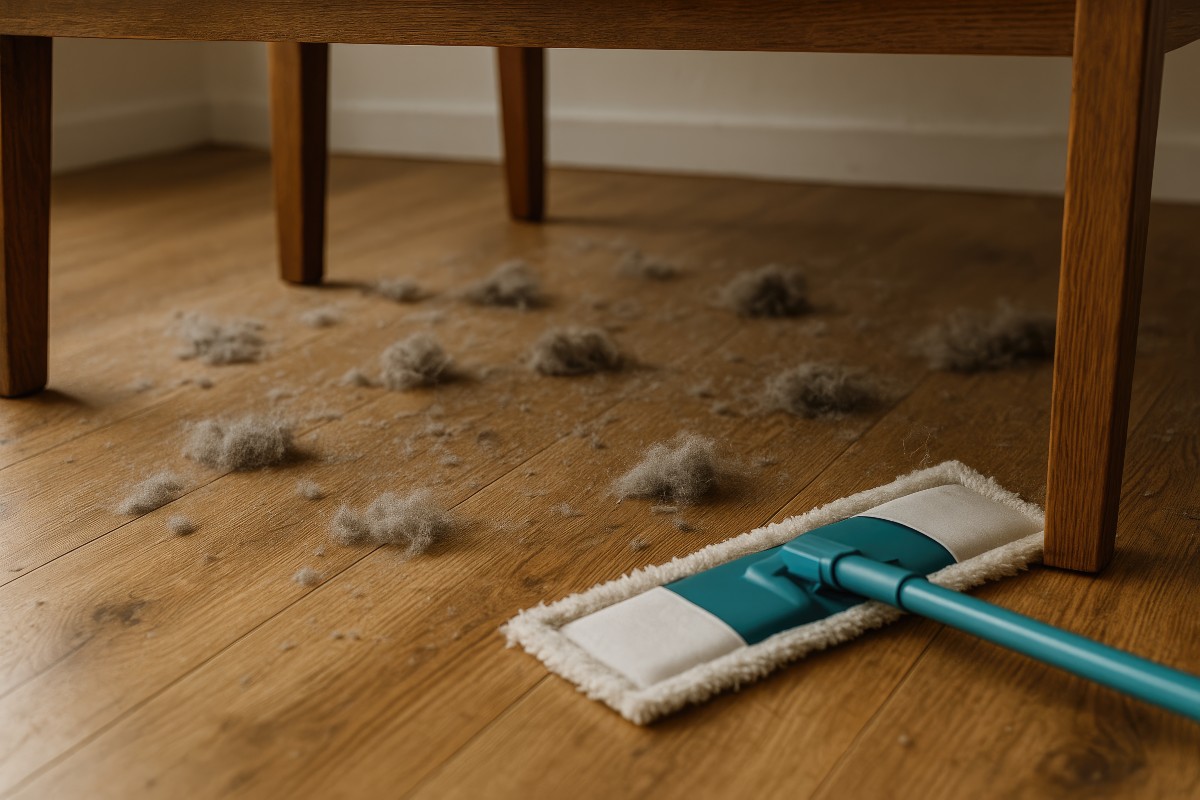
If your bedroom has laminate, wood, or vinyl flooring – good news! It doesn’t have the ability to hold dust like carpet and rugs, but it does need regular sweeping and mopping to be at its best.
What to do:
-
Use a microfibre mop – these have the ability to trap dust much better than a regular broom (3).
-
Vacuum first, mop second. Dry dust first, then go in with a damp mop to finish otherwise you might be struggling and just moving the dust around.
-
Don’t use soaking wet mops – just a light dampness is enough, especially for wood floors or you could be slipping all over the place.
If you’ve got carpets, think about steam cleaning them once or twice a year – it really helps freshen things up and kills dust mites (4).
5. Curtains and blinds – the forgotten dust collectors
Curtains, blinds, and even lampshades gather dust, but most of us forget about them completely.
What to do:
-
Vacuum curtains with the upholstery attachment or take them down and wash them if the label allows, just be careful not to pull the curtain pole down with them.
-
For blinds, use a microfibre cloth or blind duster – or, if you’re looking for a hack with items you have on hand, wrap a sock around a ruler. Old-school but effective.
-
Wipe down lampshades gently with a lint roller or dry cloth. These can be more delicate than you’d think.
6. Mind the air – it’s full of dust too
It’s not just about cleaning what you can see. Airborne dust is settling constantly, as such, improving your air quality helps stop it building up in the first place (5).
What to do:
-
Get an air purifier with a HEPA filter. Great for those suffering with allergies or asthma.
-
Open windows regularly – but wisely. A bit of fresh air is always good, but try to avoid opening them wide on windy, dry days when dust and pollen are flying about.
-
Houseplants can help filter the air a little. Though, it’s important to remember they need to be kept clean too – dusty leaves don’t help anyone.
7. Ditch the fabric decor
Rugs, throws, upholstered furniture – all of these add a nice and cosy feel, but they are remarkable dust collectors. If you’re dealing with serious issues or allergies, it might be time to re-think your textiles.
What to do:
-
Swap heavy curtains for light, washable ones, or even blinds.
-
Minimise soft furnishings where you can – or at least wash them regularly.
-
If you love your rug, beat it out outside every few months and give it a proper clean.
8. Keep pets out (if you can stand it)
Now, lots of us here are Bensons are pet lovers and would struggle with this suggestion, but fur and dander do seriously add to the dust load (6).
What to do:
-
Try a no-pets policy in the bedroom, especially if you’ve got allergies.
-
If that’s a hard no, remember to brush your pets regularly, ideally outside, to reduce how much fur ends up on your pillow.
-
Wash pet bedding often, even if it’s not in the bedroom – dust and dander travel.
9. Don’t forget the little things
Sometimes it’s the small things that make the biggest difference:
-
Change your clothes outside the bedroom – especially whenever you’ve been in dusty places or gardening.
-
Keep laundry in a closed hamper – dusty clothes can add to dusty air.
-
Use anti-static cloths or microfibre dusters – they work to trap dust instead of spreading it around the room.
-
Don’t go overboard with dry dusting – always use a damp cloth where possible as this helps to actually pick up the dust, not just move it.
Final thoughts: dust happens, but it doesn’t have to win
Unfortunately, we’ll never be able to eliminate all the dust in the bedroom and house entirely, that’s just life. But with a few easy changes and some consistency, you can really cut down how much ends up existing in and around your bedroom.
You don’t need to clean like it’s your full-time job – just do your best to keep on top of the basics. Hoover regularly, keep things tidy, wash that bedding, and keep an eye on air quality.
And remember – if you’re finding dust on every surface hours after you’ve cleaned, it might be time to check your heating system or ventilation for dust build-up too.
Sources:
-
https://www.bona.com/en-us/homeowner/how-to/why-are-microfiber-mops-better-for-cleaning/
-
https://cleaning-hacks.sharkclean.co.uk/the-complete-guide-to-steam-cleaning-a-carpet/
-
https://www.sciencedirect.com/topics/engineering/airborne-dust
-
https://www.lung.org/clean-air/indoor-air/indoor-air-pollutants/pet-dander
Gemma Henry - Content Lead
Gemma finds sleep fascinating and describes the discovery aspect of her role as eye-opening. Her keen eye for detail and dedication to thorough research ensures that Bensons customers get the informative sleep-based advice they're looking for.