


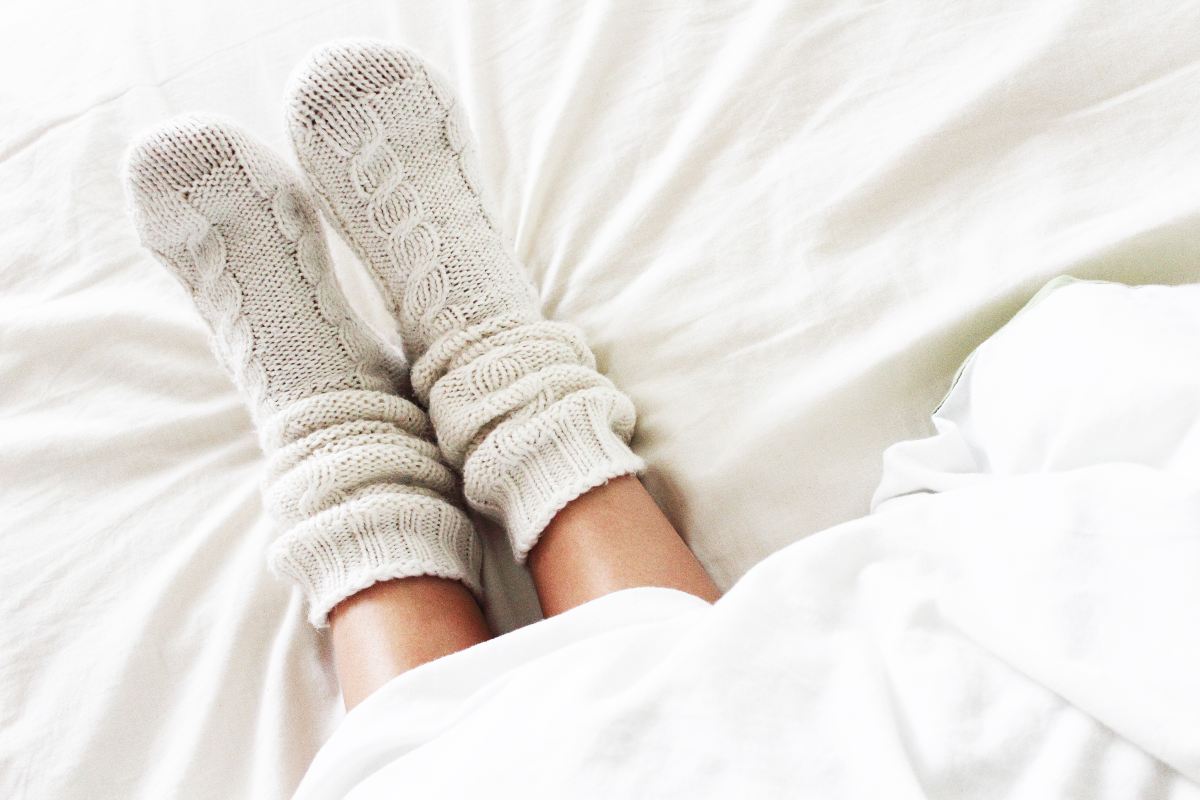
Socks or No Socks: Which is Better for Sleep?
 James Wilson
The short answer: Wearing socks in bed may help you sleep if cold feet are stopping you from getting comfortable. But socks are not automatically “better” for sleep. If they make you feel hot, restricted or irritated, sleeping barefoot may suit you better.
As with many supposed sleep hacks, the answer is less exciting than the headline.
There is some research suggesting that warming your feet can help with falling asleep. But the direct evidence for sleeping in socks is based on a very small study, so it certainly doesn't mean we should all start wearing socks to bed.
For me, the more useful question is: do socks make you more comfortable?
If your feet are cold, they might. If you hate having your feet covered, probably not.
Can wearing socks in bed help you sleep?
Potentially.
A small 2018 study investigated whether warming people's feet with bed socks affected their sleep. Six healthy young men, with an average age of 22.7, each spent one night sleeping in socks and another without them, with the conditions tested in random order. They slept for seven hours in a room kept at 23°C (1)(2).
When they wore socks, participants were estimated to:
-
fall asleep around 7.5 minutes sooner
-
sleep for around 32 minutes longer
-
have 7.6% higher sleep efficiency.
Their feet also remained around 1.3°C warmer (1).
Those figures sound impressive, but there is an important catch.
The study involved only six people.
Sleep was also estimated using wrist actigraphy, which tracks movement, rather than directly measuring sleep through brain activity. And although the objective measures changed, participants' own assessments of their sleep quality did not significantly improve. There was also no significant change in core body temperature or heart rate (1).
So, this is an interesting study, rather than proof that sleeping in socks will make everyone sleep better.
Why might warm feet help you fall asleep?
There's a sensible physiological explanation behind the idea.
As your body prepares for sleep, changes in blood flow help regulate temperature. Blood vessels in areas including the hands and feet widen, a process known as vasodilation.
Research published in Nature has linked warmer hands and feet and this change in peripheral blood flow with the process of falling asleep (3).
This is why the idea isn't quite as contradictory as it sounds: warming your feet doesn't necessarily mean making your whole body hotter.
The 2018 sock study, for example, found warmer foot temperatures without a significant increase in core body temperature.
But that doesn't mean hotter feet equal better sleep.
Your sleeping environment, bedding, nightwear and individual temperature preferences all contribute to whether you feel comfortable enough to settle.
Socks vs no socks: which is better for sleep?
There isn't one winner.
Wearing socks to bed may be better if:
-
your feet regularly feel cold when you get into bed
-
cold feet make it difficult for you to settle
-
you find the feeling of socks cosy or comforting
-
you prefer keeping your feet warm without adding heavier bedding over the rest of your body.
Sleeping without socks may be better if:
-
your feet are already comfortably warm
-
you tend to overheat or become sweaty in bed
-
you dislike having your toes enclosed
-
seams, fabric or pressure around your ankles irritate or distract you.
My no-nonsense take: don't turn socks into another sleep rule.
Sleep is complicated enough without worrying that you've chosen the wrong thing to put on your feet.
If socks help you feel comfortable, wear them. If they don't, take them off.
What are the benefits of wearing socks to bed?
For someone prone to cold feet, the biggest potential benefit is simply comfort.
Keeping your feet warmer may support the body's normal thermoregulatory processes around sleep onset, and that small 2018 trial found several improvements in objectively estimated sleep measures (1).
But I wouldn't describe socks as a treatment for poor sleep.
The study involved healthy young men rather than people experiencing insomnia or other sleep problems, and its tiny sample means we can't assume that the same results apply to everybody.
Think of socks as something you can use to make yourself comfortable, rather than a sleep aid you need to rely on.
Are there any downsides to sleeping in socks?
The main downside is equally simple: they might make you uncomfortable.
If your socks leave your feet feeling hot or sweaty, bunch up around your toes, have irritating seams or feel tight around your ankles, they may become another distraction when you're trying to settle.
Sensory preferences matter here.
Some people love feeling cosy and enclosed. Others can't relax until their feet are free.
Neither group is sleeping “wrong”.
What type of socks are best for sleeping?
You don't need special sleep socks.
If you'd like to try wearing socks to bed, start with a clean, dry and comfortable pair you already own.
I'd look for socks that:
-
don't feel tight around your ankles
-
don't have seams that irritate your toes
-
don't make your feet excessively warm or sweaty
-
feel comfortable enough that you stop noticing you're wearing them.
And don't assume thicker automatically means better. You're aiming for comfortable feet rather than the warmest feet possible.
Is it better to sleep barefoot?
For some people, absolutely.
If your feet naturally remain comfortable through the night, there is no evidence from this small sock study that you need to start covering them simply to improve your sleep.
Likewise, if socks make you feel hotter, restricted or more aware of your feet, sleeping barefoot is probably the more comfortable option for you.
Comfort is more useful than following a blanket rule.
Can you wear socks before bed and take them off to sleep?
Yes, and this can be a useful middle ground if you have cold feet but don't like sleeping in socks.
You could put on a comfortable pair while you're winding down and remove them when you get into bed or once your feet feel warm enough.
The important thing isn't keeping socks on for a prescribed number of hours. It's creating a sleeping environment in which you feel comfortable.
Should you wear socks to bed if your feet get cold?
If cold feet are preventing you from relaxing, socks are certainly worth trying.
Keep the experiment simple:
-
Start with how your feet feel. If they're already comfortable, you don't need to change anything.
-
Try a comfortable pair of socks if they're cold. Avoid anything tight, itchy or irritating.
-
Pay attention to your sensory preferences. Take them off if having your feet covered bothers you.
-
Respond to your temperature. If you become hot or sweaty, remove them.
-
Think about your whole sleep environment. Your bedding, nightwear and bedroom temperature all influence comfort.
-
Don't obsess over the results. Try socks for a few nights and pay attention to whether you settle comfortably and how you feel the following day.
There's no need to start timing exactly how many minutes it takes you to fall asleep.
That's a great way of turning a very simple experiment into something else to worry about at bedtime.
Do you need to buy special sleep socks?
No.
If you already own a pair that feels comfortable, start there.
You don't need to turn better sleep into a shopping project or buy something marketed specifically as a sleep product just to find out whether warmer feet work for you.
The verdict: should you sleep with socks on or off?
Wear socks if they make you more comfortable. Take them off if they don't.
There is some evidence that warming the feet may support sleep onset, and one very small laboratory study found that healthy young men fell asleep faster and slept longer while wearing bed socks. But with only six participants, it isn't strong enough evidence to recommend socks as a universal sleep solution. [pubmed.ncb...lm.nih.gov]
The better approach is to pay attention to your own temperature and sensory needs.
If cold feet regularly make it difficult to settle, try socks.
If you're already warm, hate having fabric around your toes or find yourself kicking your socks off halfway through the night, don't force it.
Good sleep isn't about collecting more rules. It's about understanding what helps your body feel comfortable enough to switch off.
Sources:
James Wilson - Sleep Expert
James is our current Sleep Expert and has helped hundreds of individuals, sports organisations and communities with their sleep using his non-nonsense approach to sleep methods. He has also written, presented, and broadcasted about sleep for over 10 years. His sleep expertise has been showcased on the Channel 4 series The Secrets of Sleep, as well as through appearances on The One Show, This Morning, BBC Breakfast, Steph’s Packed Lunch, Channel 4 News, Sky Sports, Football Focus, and many more.


