


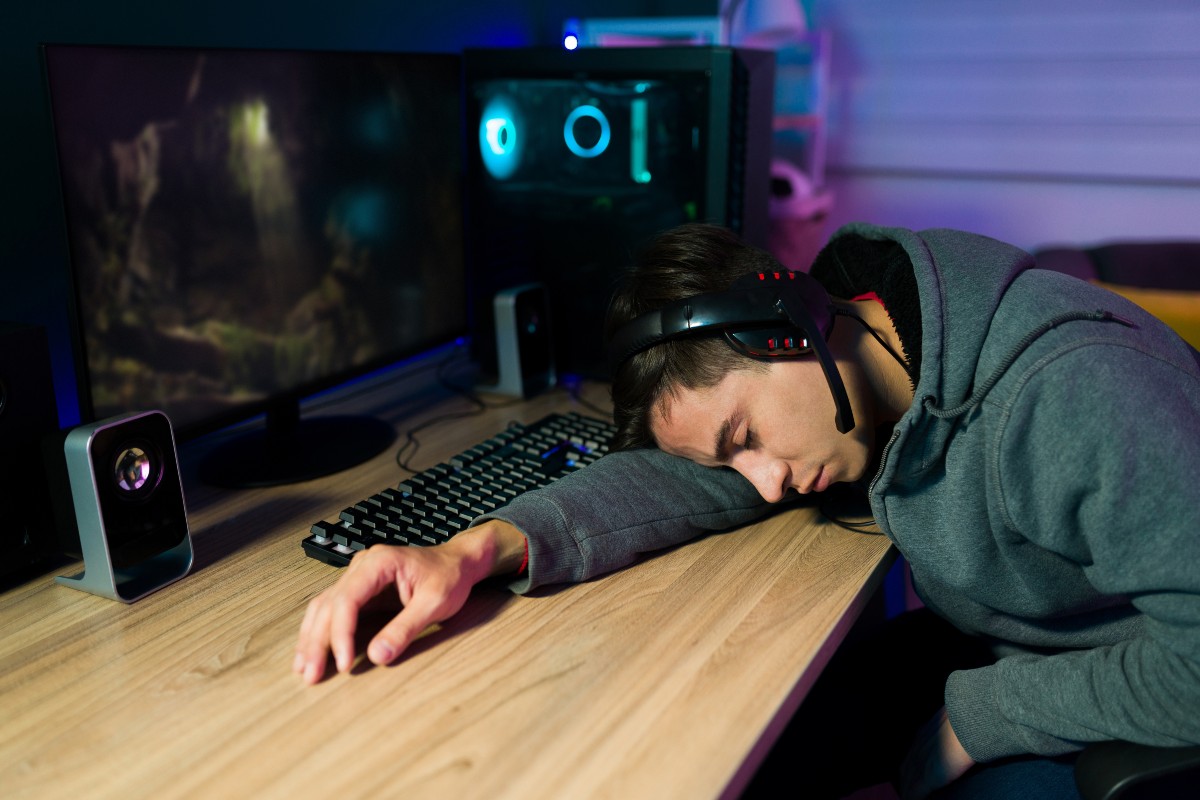
Tips for Balancing Sleep and Gaming Performance
 James Wilson
There is nothing quite like getting absorbed in a good game. Whether you’re exploring a huge open world, chasing a new rank or telling yourself you’ll stop as soon as you finish this mission, a gaming session can make hours disappear surprisingly quickly.
And sometimes, sleep disappears with them.
Research commissioned by Bensons for Beds around GTA VI asked gamers about exactly that trade-off. Among the 570 GTA players surveyed, the average amount of sleep they expected to sacrifice during the game’s launch weekend was 5.1 hours. Just 5% said they expected to sacrifice no sleep at all.
Although the questions focused specifically on GTA VI and its launch, the issue is much broader. New releases, online matches, weekend gaming sessions and competitive play can all push sleep further down the priority list.
As a sleep expert and someone who believes good sleep advice should work around real life, I don’t think the answer is simply to tell people to turn the console off and go to bed. Gaming is something people enjoy, and enjoyment matters.
Instead, let’s look at how you can make space for gaming and give yourself the opportunity to get the sleep you need.
Does Sleep Affect Gaming Performance?
If you care about playing well, sleep deserves a place in your gaming strategy.
Our survey asked people what they had experienced after a poor night’s sleep before gaming. Almost half (49%) reported slower reaction times, while 48% had found it harder to concentrate.
It affected more than speed and focus, too. 45% said they became frustrated or angry more easily, 43% reported making more mistakes and 35% said they had lost more games or failed more missions. Almost a third, at 32%, reported poorer decision-making.
So, if you find yourself repeatedly making the same mistake, struggling to focus or getting disproportionately annoyed with a game after a late night, there may be more going on than an off day.
It doesn't automatically mean sleep is the cause, but it's worth considering as part of the picture.
Interestingly, gamers appear open to that conversation. More than two-thirds (68%) of those surveyed said they definitely or probably would change their sleeping habits if they knew doing so could improve their gaming performance.
So how can you find a balance?
1. Plan when you’ll Stop, not just when you’ll Start
Most people know roughly when they are going to start gaming. Fewer decide when they are going to finish.
That can make a big difference.
Before you start, look at what tomorrow actually involves. When do you need to get up? Are you working? Studying? Taking the kids somewhere? Do you need to drive?
Then work backwards.
I'm not interested in giving you a universal bedtime because sleep doesn't work like that. What I would encourage you to notice is your sleep window, the period of roughly 90 minutes when you naturally start to feel sleepy.
If you continually game through those signals because you're halfway through something, you may find it harder to settle once you eventually stop.
There is room for flexibility here. A late Saturday night doesn't mean you've somehow “failed” at sleep. The aim is simply to make gaming a conscious choice rather than suddenly looking at the clock and wondering how it became 3am.
That feels particularly relevant when you look at our GTA VI survey. Around a third of GTA players surveyed expected to be playing until at least 2am during launch weekend: 21% said 2am to 4am, 5% after 4am and 8% planned to stay awake all night.
2. Use Your Own Performance as Feedback
One of the most useful things you can do is stop thinking about sleep as a set of rules and start noticing how you respond to it.
How do you play after a good night's sleep compared with a bad one?
Perhaps you notice your reactions aren't as sharp. Maybe your decision-making is fine but your patience disappears. Or perhaps you don't notice much difference at all.
Treat it almost like testing a new controller setup. Experiment.
Try giving yourself more opportunity for sleep for several nights and see whether you notice a difference in how you feel and how you play. If something works, use it. If it doesn't, try something else.
You don't need to create an elaborate sleep-tracking spreadsheet. The objective is simply to become a little more aware of the connection between what you do and how you feel.
3. Give Your Brain a Chance to come down from the Game
Finishing a game and expecting to be asleep five minutes later isn't realistic for everybody.
You've potentially spent the last few hours making rapid decisions, solving problems, competing or trying very hard not to get virtually shot. You might still feel alert when you put down the controller.
Rather than worrying that you should be able to fall asleep immediately, give yourself some space between gaming and trying to sleep.
Start by getting your practical jobs done. Brush your teeth, get changed, lock up, sort out whatever you need for tomorrow. Then find something that helps you move from being engaged to being relaxed.
That might be:
- watching something familiar or funny
- listening to music or a podcast
- having a bath or shower
- reading
- doing a breathing exercise
- scrolling through something that genuinely helps you switch off
Yes, I said scrolling.
I'm less interested in blanket rules about screens than I am in how an activity affects you. If something you're watching on your phone makes you relaxed and sleepy, that is different from an app that keeps you stimulated, frustrated or endlessly scrolling.
Pay attention to the effect rather than worrying about doing bedtime “correctly”.
4. Be Careful of the Caffeine-Performance Trap
One of the most interesting findings from our research was what GTA players planned to do about lost sleep. 40% said they expected to rely on caffeine or energy drinks, making it the most commonly selected response, ahead of daytime naps at 36% and lie-ins at 32%.
Caffeine can make us feel more alert. What it cannot do is turn insufficient sleep into sufficient sleep.
It's particularly easy for gaming and caffeine to become linked. You're tired, you want to keep playing and a coffee or energy drink gives you the boost you need to carry on.
Rather than saying you should never have caffeine while gaming, I’d encourage you to notice your own response.
Ask yourself:
- How much caffeine am I having?
- What time am I having it?
- Does it seem to affect how easily I get to sleep?
- Am I using caffeine because I enjoy it or because I’m repeatedly exhausted?
People metabolise caffeine differently, so there isn't one cut-off time that will work perfectly for everyone. Experiment with having less or having it earlier and see whether it changes anything.
5. Protect Your Wake-Up Time where You Reasonably Can
When people talk about sleep routines, the conversation usually focuses on bedtime.
I often find wake-up time more useful.
Getting up at roughly similar times and seeing daylight earlier in the day can give your body clock useful information about where it is in the 24-hour cycle.
That doesn't mean setting an alarm for exactly 7:02am every day for the rest of your life.
Real life isn't that neat.
If you've had an unusually late gaming night, you may naturally want some extra sleep the following morning. That's OK. What I'd avoid is repeatedly shifting your entire sleep schedule backwards and forwards because gaming has become the thing determining when your day starts.
Think consistency rather than perfection.
6. Don't Build Your Strategy around “Catching Up” Later
There will be nights when gaming wins.
Sometimes it's a launch you've been waiting years for. Sometimes your friends are all online. Sometimes you're simply having too much fun to stop.
You don't have to panic about one late night.
But routinely cutting your sleep short because you assume you'll fix everything with a weekend lie-in is a different proposition.
In our survey, 32% of GTA players said they planned to use lie-ins to make up for sleep lost during the GTA VI launch weekend, while 36% planned daytime naps.
Both can be useful tools depending on the individual and circumstances, but I wouldn't make deliberately restricting your sleep and recovering later your default routine.
Instead, look at sleep across your week. Are you regularly giving yourself enough opportunity to get the sleep you need?
That is a much more useful question than whether you achieved a supposedly perfect number of hours every single night.
7. Remember that Gaming is Supposed to be Enjoyable
Lastly, don't turn sleep into something else to compete at.
There is a temptation with both gaming and sleep to become obsessed with optimisation. The perfect setup. The perfect strategy. The perfect sleep score.
But you aren't failing because you stayed up late occasionally, and you don't need a flawless routine to sleep well.
For me, the goal is balance.
Gaming can be social, challenging, relaxing, entertaining and a genuine way to switch off from everyday life. Good sleep advice should help you enjoy those things, not make you feel guilty about them.
If you are repeatedly exhausted, however, or gaming is pushing out sleep night after night, that's worth paying attention to.
Experiment with when you play, when you stop, how you wind down and how you use caffeine. Then pay attention to the result.
You might even find that more sleep becomes part of your gaming strategy, rather than something getting in its way.
James Wilson - Sleep Expert
James is our current Sleep Expert and has helped hundreds of individuals, sports organisations and communities with their sleep using his non-nonsense approach to sleep methods. He has also written, presented, and broadcasted about sleep for over 10 years. His sleep expertise has been showcased on the Channel 4 series The Secrets of Sleep, as well as through appearances on The One Show, This Morning, BBC Breakfast, Steph’s Packed Lunch, Channel 4 News, Sky Sports, Football Focus, and many more.


